

- Complex Reconstruction & Revision Surgery
Complex Reconstruction & Revision Surgery
Keyhole surgery, cartilage preservation and sports injury management, explained clearly for athletes and active patients who want a faster, more precise route back to full function.
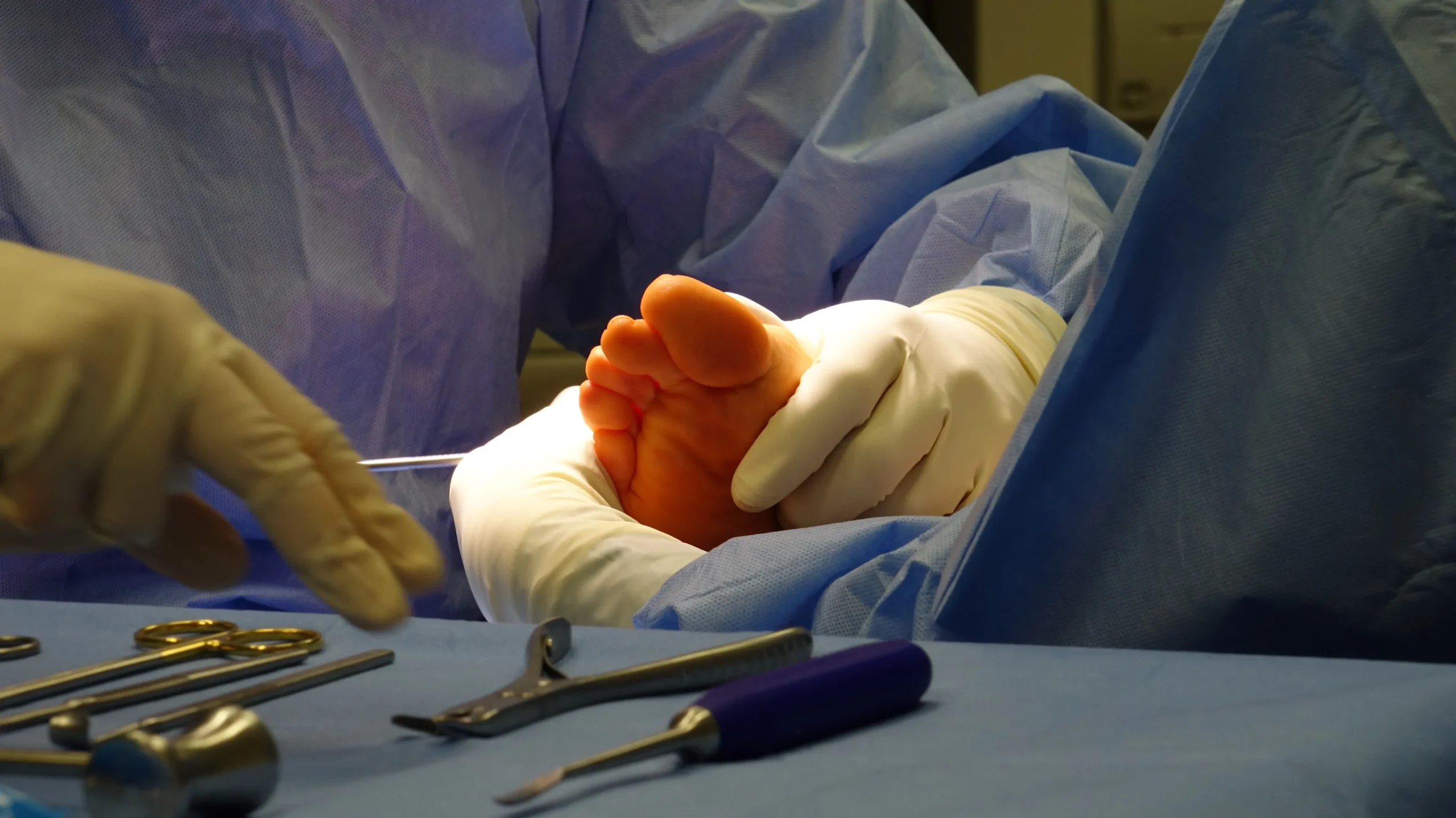

Ankle Arthroscopy
Ankle arthroscopy is a minimally invasive (“keyhole”) procedure used to diagnose and treat a wide range of ankle conditions. Through two or three small incisions, a miniature camera and specialised instruments are introduced into the joint, allowing treatment without the need for a large incision. Arthroscopy often results in less pain, reduced soft tissue damage and faster recovery compared with traditional open surgery.
SYMPTOMS
- Persistent ankle pain
- Ankle impingement
- Cartilage injuries
- Osteochondral lesions of the talus
- Loose bodies
- Early ankle arthritis
- Synovitis (inflamed joint lining)
- Ankle stiffness
- Assessment of ankle instability
The Operation
The procedure is performed under either general or regional anaesthesia. During surgery, damaged tissue is removed, cartilage defects are treated where appropriate, and the joint is carefully assessed. Many procedures are performed as day-case surgery.
Recovery
Most patients are able to walk immediately or within a few days, depending upon the procedure performed. Physiotherapy usually begins early to restore movement, strength, and confidence.
Expected Outcome
Most patients experience significant improvement in pain, mobility, and function, allowing an earlier return to work and sporting activities.
Arthroscopic Ligament Reconstruction
Some ligament injuries can be treated using arthroscopic techniques combined with minimally invasive reconstruction. This allows accurate assessment of the ankle joint while addressing damaged ligaments through small incisions.
Benefits
- Smaller incisions
- Less soft tissue disruption
- Earlier rehabilitation
- Improved visualisation of cartilage injuries
- Simultaneous treatment of associated pathology
Recovery
Recovery follows a structured rehabilitation programme with protected weight bearing initially, followed by progressive strengthening, balance training, and return to sport.
Expected Outcome
The majority of patients regain a stable ankle with excellent functional recovery.
Cartilage Injuries & Osteochondral Lesions
The smooth cartilage lining the ankle joint may be damaged following an ankle sprain or fracture. In some patients, a small piece of cartilage and underlying bone becomes detached from the talus, known as an osteochondral lesion.
Symptoms
- Persistent ankle pain
- Swelling
- Locking or catching
- Pain during sporting activities
- Recurrent ankle sprains
- Failure to recover following an ankle injury
Diagnosis
Clinical examination is combined with weight-bearing X-rays and MRI scanning. CT scans are occasionally required to assess the size and stability of the lesion.
Treatment
Treatment depends on the size and location of the defect. Options include physiotherapy, activity modification, arthroscopic debridement, microfracture, cartilage preservation techniques, bone grafting procedures, or osteochondral grafting in selected cases.
Recovery
Recovery varies according to the procedure performed but generally involves a period of protected weight bearing followed by physiotherapy.
Expected Outcome
Early diagnosis and appropriate treatment offer the best opportunity for pain relief and preservation of ankle function.
Sports-Related Foot & Ankle Injuries
Sport places considerable demands on the foot and ankle. Acute injuries and overuse conditions are common in runners, footballers, rugby players, racquet sport athletes, and recreational sports participants.
Common Injuries
- Ankle sprains
- Achilles tendon injuries
- Stress fractures
- Cartilage injuries
- Plantar fasciitis
- Peroneal tendon injuries
- Midfoot injuries
- Forefoot overload
Assessment
Every sporting injury is different. Accurate diagnosis is essential to ensure the correct treatment and avoid long-term complications or recurrent injury. Mr Rashid provides a comprehensive assessment using clinical examination together with advanced imaging where appropriate.
Treatment
Most sporting injuries respond to non-operative treatment including physiotherapy, rehabilitation and activity modification. Surgery is reserved for injuries that fail to recover or require anatomical repair.
Return to Sport
Rehabilitation programmes are tailored to the individual athlete, with a focus on restoring strength, balance, agility and confidence before returning safely to sport.
Small Joint Arthroscopy & Tendinoscopy
Tendinoscopy is a minimally invasive technique used to examine and treat certain tendon disorders around the ankle through very small incisions. A tiny camera is introduced into the tendon sheath, allowing inflamed tissue or adhesions to be treated with minimal disruption.
Conditions Treated
- Posterior tibial tendon disorders
- Peroneal tendon disorders
- Flexor hallucis longus (FHL) tendon problems
- Chronic tendon inflammation
- Tendon adhesions
Advantages
Compared with traditional open surgery, tendinoscopy may offer smaller incisions, less postoperative pain, reduced scarring, earlier rehabilitation, and a faster return to daily activities.
Recovery
Recovery depends upon the tendon involved and any associated procedures performed. Most patients begin a structured rehabilitation programme soon after surgery.
Expected Outcome
When appropriately indicated, tendinoscopy can provide excellent pain relief and improved tendon function while minimising soft tissue disruption.
About Mr Rashid
Mr Anjum Rashid is a Clinical Lead and Consultant Orthopaedic Foot and Ankle Surgeon at James Cook University Hospital, Middlesbrough. He also works at Tees Valley Hospital, Woodlands Darlington, and Tyneside Surgical Services Newcastle.
Contact Info
Middlesbrough · Darlington · Newcastle