

- Surgical Procedures
Surgical Procedures
A guide to the operations Mr Rashid performs most frequently, who each procedure may benefit, what the operation involves, and what to expect during recovery.
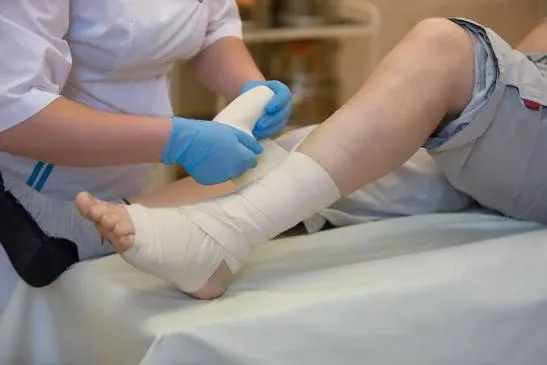

Bunion Correction Surgery
Bunion correction surgery is performed to relieve pain, improve foot alignment, and restore function when a bunion (hallux valgus) causes persistent symptoms that do not respond to non-operative treatment. The procedure involves realigning the bones and soft tissues of the foot to correct the deformity while preserving or restoring normal joint function. Mr Rashid performs both minimally invasive (MIS) and conventional open bunion surgery, chosen according to the severity of the deformity and the individual patient’s needs.
Who May Benefit
- Persistent pain despite appropriate footwear
- Difficulty walking or carrying out daily activities
- Progressive deformity
- Difficulty fitting into normal shoes
- Associated lesser toe deformities
The Operation
Depending on the severity of the bunion, surgery may involve one or more bone cuts (osteotomies), correction of soft tissue imbalance, and stabilisation using screws or other fixation devices.
Recovery
Most patients can weight-bear immediately in a specialised post-operative shoe. Swelling gradually improves over several months. Most return to desk-based work within two to four weeks, although full recovery may take up to six months.
Expected Outcome
Surgery aims to relieve pain, improve alignment, and allow a comfortable return to normal footwear and activities.
Total Ankle Replacement
Total ankle replacement replaces the damaged ankle joint with a modern artificial implant, relieving pain while preserving movement. It is an excellent option for many patients with end-stage ankle arthritis who wish to maintain ankle mobility.
Who May Benefit
- Severe ankle arthritis
- Persistent pain despite conservative treatment
- Reasonable bone quality
- Good overall health
- Correctable foot deformity and ligament stability
The Operation
The damaged joint surfaces are removed and replaced with precision-engineered metal components separated by a polyethylene bearing. Additional procedures such as ligament reconstruction, tendon balancing, or deformity correction may be performed where required.
Recovery
Hospital stay is usually one or two nights. A period of protected weight bearing is followed by physiotherapy to restore movement, strength and balance. Recovery varies depending on any additional procedures performed.
Expected Outcome
The aim is to provide long-lasting pain relief while preserving ankle movement and improving quality of life.
Ankle Fusion
Ankle fusion permanently joins the bones of the ankle, eliminating painful movement within the arthritic joint. It remains a reliable treatment for severe ankle arthritis and can provide durable long-term pain relief.
Who May Benefit
- Advanced ankle arthritis
- Severe pain
- Failed previous surgery
- Deformity unsuitable for ankle replacement
The Operation
The damaged cartilage is removed, and the bones are positioned in the correct alignment before being stabilised with screws and, where necessary, plates.
Recovery
Patients are usually non-weight-bearing for approximately six weeks before gradually progressing to weight-bearing in a walking boot. Physiotherapy is introduced as healing progresses.
Expected Outcome
Most patients achieve excellent pain relief and improved walking ability once the bones have successfully fused.
Ankle Ligament Reconstruction
This procedure restores stability to ankles affected by chronic ligament injury and recurrent sprains. The damaged ligaments are repaired or reconstructed using modern anatomical techniques.
Who May Benefit
- Recurrent ankle sprains
- Chronic instability
- Failure of physiotherapy
- Persistent pain associated with instability
Recovery
A walking boot is worn initially, followed by a structured rehabilitation programme. Return to sporting activities usually occurs between four and six months.
Expected Outcome
The aim is to restore ankle stability, reduce recurrent sprains and improve confidence during walking and sport.
Achilles Tendon Repair
Achilles tendon repair is performed following an acute rupture to restore continuity of the tendon and allow healing in the correct position.
Who May Benefit
- Selected active patients
- Those wishing to return to higher levels of activity
- Where the tendon ends are unsuitable for non-operative treatment
Recovery
Treatment involves functional rehabilitation in a walking boot with gradual progression of weight bearing and physiotherapy. Recovery continues for many months.
Expected Outcome
Most patients regain good strength and function, although complete recovery may take 9–12 months.
Achilles Tendon Reconstruction
When an Achilles rupture has been neglected, or the tendon has failed to heal satisfactorily, reconstruction may be required. This often involves tendon transfer such as the flexor hallucis longus (FHL) tendon, together with additional reconstructive techniques.
Recovery
Recovery is longer than for acute repair and usually involves a period of protected weight bearing followed by physiotherapy.
Expected Outcome
The aim is to restore strength, improve walking ability, and reduce long-term disability.
Tendon Transfer Surgery
A tendon transfer involves moving a healthy tendon to replace the function of one that has been damaged or is no longer working effectively. These procedures are commonly used in neurological conditions, tendon ruptures, and complex foot deformities.
Recovery
Recovery depends upon the tendon transferred and the underlying condition. Rehabilitation is essential to retrain the transferred tendon to perform its new function.
Expected Outcome
The aim is to restore balance, improve function, and reduce pain.
Foot Fusion Surgery
Foot fusion joins one or more painful arthritic joints to eliminate movement and relieve pain while maintaining a stable, well-aligned foot.
Common Procedures Include
- First MTP joint fusion
- Midfoot fusion
- Triple fusion
- Subtalar fusion
- Talonavicular fusion
Recovery
Most fusion procedures require approximately six weeks of protected or non-weight bearing, depending on the joints involved, followed by gradual rehabilitation.
Expected Outcome
Fusion surgery provides reliable pain relief and improved foot stability for many patients.
Ankle Arthroscopy
Ankle arthroscopy is a keyhole procedure used to diagnose and treat a variety of ankle conditions through very small incisions. It allows treatment of cartilage injuries, ankle impingement, loose bodies, and inflamed tissue with minimal disruption.
Recovery
Many patients return home on the day of surgery. Weight bearing depends upon the procedure performed, and physiotherapy usually begins early.
Expected Outcome
The aim is to relieve pain, improve ankle movement, and facilitate an earlier return to normal activities.
Cartilage Repair Procedures
Cartilage repair aims to treat areas of damaged cartilage within the ankle joint, helping to relieve pain and preserve joint function.
Treatment Options
- Arthroscopic debridement
- Microfracture
- Bone grafting
- Osteochondral grafting
- Other cartilage restoration techniques where appropriate
Recovery
Recovery varies according to the procedure performed and usually involves a period of protected weight bearing followed by physiotherapy.
Expected Outcome
Results depend upon the size and location of the cartilage injury, as well as patient factors and rehabilitation.
Osteotomy
An osteotomy is a controlled surgical cut in a bone that allows it to be repositioned into a more normal alignment. Osteotomies are commonly performed to correct deformity, redistribute pressure, and improve joint function.
Common Indications
- Bunions
- Flatfoot deformity
- Cavovarus foot
- Malunion following fracture
- Arthritis associated with deformity
Recovery
Recovery depends upon the location of the osteotomy and the fixation used. Weight-bearing recommendations are tailored to the procedure performed, and physiotherapy is introduced as healing progresses.
Expected Outcome
The aim is to restore alignment, improve function, reduce pain and delay or prevent further joint degeneration where possible.
Mr Rashid is a Consultant Trauma and Orthopaedic Surgeon specialising exclusively in foot and ankle surgery. He offers the full spectrum of modern foot and ankle procedures, including minimally invasive surgery, complex reconstruction, total ankle replacement, and revision surgery. Rather than offering a single technique for every patient, he believes in selecting the most appropriate treatment for each individual ensuring every patient receives the operation best suited to their condition, lifestyle and long-term goals.
About Mr Rashid
Mr Anjum Rashid is a Clinical Lead and Consultant Orthopaedic Foot and Ankle Surgeon at James Cook University Hospital, Middlesbrough. He also works at Tees Valley Hospital, Woodlands Darlington, and Tyneside Surgical Services Newcastle.
Contact Info
Middlesbrough · Darlington · Newcastle