

- Fractures & Trauma
Fractures & Trauma
Clear, expert guidance on foot and ankle fractures from simple stable breaks to complex trauma reconstruction for patients seeking an accurate diagnosis and the fastest safe route back to full function.
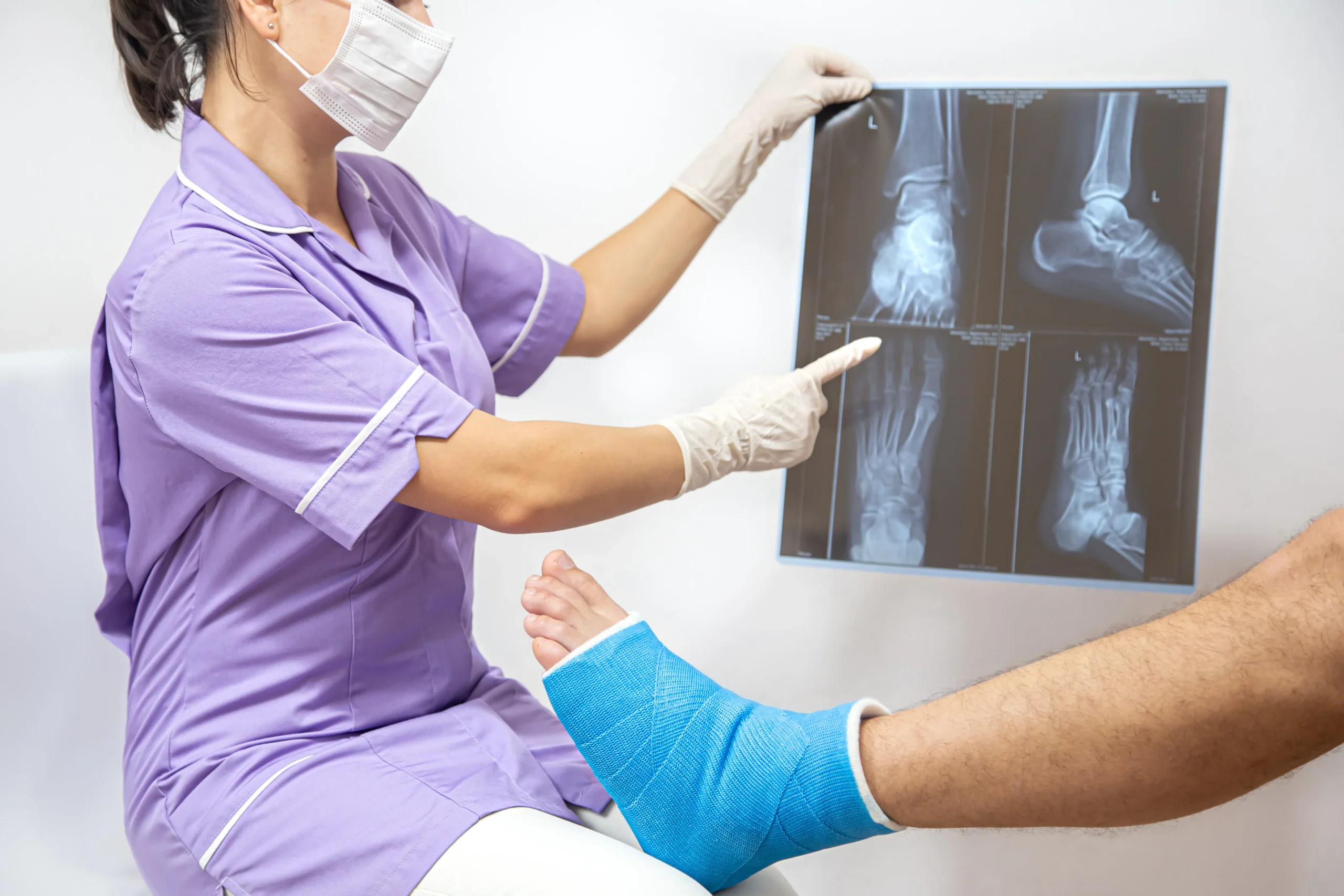

Foot & Ankle Fractures
Foot and ankle fractures are common injuries that may occur following a fall, sporting injury, twisting injury or road traffic accident. They range from simple stable fractures that heal well in a boot or cast to more complex injuries requiring surgery.
SYMPTOMS
- Severe pain
- Swelling and bruising
- Difficulty or inability to bear weight
- Deformity in more severe injuries
- Tenderness over the injured bone
Diagnosis
A thorough clinical assessment is combined with X-rays. CT or MRI scans may be required for more complex injuries or to assist surgical planning.
Treatment
Treatment depends on the type, location, and severity of the fracture. Stable fractures may be treated without surgery using a cast or walking boot, while displaced or unstable fractures often require surgical fixation.
Recovery
Recovery varies according to the injury. Some fractures allow early protected weight bearing, while others require a period of non-weight bearing before rehabilitation begins. Physiotherapy is often an important part of recovery.
Expected Outcome
Treatment aims to achieve fracture healing, restore alignment, and allow a safe return to normal daily activities. Recovery varies between individuals and depends on the severity of the injury.
Ankle Fracture Fixation
Surgery is recommended when an ankle fracture is displaced or unstable. The aim is to restore the normal anatomy of the ankle joint and provide stable fixation to allow the fracture to heal in the correct position.
Benefits
- Displaced ankle fractures
- Unstable fractures
- Fractures associated with joint dislocation
- Certain ligament injuries accompanying the fracture
The Operation
The fracture is carefully realigned and stabilised using plates, screws, or other fixation devices. Where necessary, associated ligament injuries are treated during the same operation.
Recovery
Most patients require a period of protected or non-weight-bearing before progressing to weight-bearing in a walking boot. The rehabilitation programme is individualised according to the fracture pattern and stability of the fixation.
Expected Outcome
The objective is to restore joint alignment, promote fracture healing, and minimise the risk of long-term complications such as stiffness or post-traumatic arthritis.
Calcaneal (Heel Bone) Fractures
The calcaneus, or heel bone, is the largest bone in the foot. Fractures usually occur following high-energy injuries such as falls from height or road traffic accidents and can be complex.
Symptoms
- Severe heel pain
- Marked swelling and bruising
- Difficulty or inability to bear weight
- Heel deformity in severe cases
Treatment
Some fractures can be managed without surgery, while others require surgical reconstruction to restore the shape of the heel and the joint surfaces.
Recovery
Recovery is often prolonged and usually includes a period of non-weight-bearing followed by gradual rehabilitation. Full recovery may take many months.
Expected Outcome
Treatment aims to restore foot function, reduce pain and minimise the long-term risk of arthritis.
Lisfranc Injuries
A Lisfranc injury affects the joints and ligaments in the middle of the foot. These injuries are often overlooked initially but may lead to chronic pain and arthritis if not recognised and treated appropriately.
Common Injuries
- Pain in the midfoot
- Swelling
- Bruising on the sole of the foot
- Difficulty bearing weight
- Pain during walking
Diagnosis
Weight-bearing X-rays, CT scans, and MRI scans are often required to accurately assess the injury.
Treatment
Stable injuries may be managed without surgery. Unstable injuries usually require fixation or fusion of the injured joints to restore stability.
Recovery
Patients generally require a period of non-weight-bearing before progressing through a structured rehabilitation programme.
Expected Outcome
The aim is to restore stability of the midfoot, relieve pain and maximise long-term function.
Talus Fractures
The talus is an important bone connecting the foot and ankle. Fractures are relatively uncommon but can be serious because of the bone’s limited blood supply and its role in ankle and hindfoot movement.
Symptoms
- Severe ankle pain
- Swelling
- Difficulty bearing weight
- Reduced ankle movement
Treatment
Depending on the fracture pattern, treatment may involve immobilisation or surgical fixation using screws and plates to restore the normal anatomy.
Recovery
Many talus fractures require a prolonged period of protected or non-weight-bearing to allow healing. Regular follow-up imaging is often necessary.
Expected Outcome
The goal is to achieve fracture healing while reducing the risk of complications such as avascular necrosis or post-traumatic arthritis.
Midfoot Injuries
The midfoot contains numerous small joints and ligaments that are essential for foot stability. Injuries range from ligament sprains to fractures and fracture-dislocations.
Symptoms
- Midfoot pain
- Swelling
- Difficulty walking
- Bruising
- Pain when standing on tiptoe
Treatment
Treatment depends on the severity of the injury and may include immobilisation, physiotherapy or surgery to restore normal alignment and stability.
Recovery
Recovery varies according to the injury but often involves a period of protected weight bearing followed by rehabilitation.
Expected Outcome
The aim is to restore a stable, pain-free foot and minimise the development of long-term arthritis.
Foot Dislocations
A foot dislocation occurs when one or more joints are forced out of their normal position. These injuries frequently occur alongside fractures and require urgent assessment.
Symptoms
- Severe pain
- Swelling
- Difficulty bearing weight
- Reduced ankle movement
Treatment
The joint is repositioned as soon as possible. Depending on the associated injuries, surgery may be required to stabilise the bones and ligaments.
Recovery
The rehabilitation programme depends on the severity of the injury and whether surgery has been performed.
Expected Outcome
Prompt treatment offers the best opportunity to restore normal joint function and reduce long-term complications.
Fracture Non-Union & Malunion
Most fractures heal successfully. Occasionally, a fracture fails to heal (non-union) or heals in an unsatisfactory position (malunion), resulting in pain, deformity, or reduced function.
Symptoms
- Persistent pain
- Difficulty walking
- Deformity
- Instability
- Failure to recover following a previous fracture
Treatment
Treatment depends on the underlying cause and may involve revision fixation, bone grafting, deformity correction, or joint fusion.
Recovery
Recovery depends on the complexity of the reconstruction and usually involves a structured rehabilitation programme.
Expected Outcome
The aim is to restore bone healing, improve alignment and maximise function while reducing pain.
Complex Trauma Reconstruction
Complex trauma reconstruction involves treating severe injuries affecting the bones, joints, ligaments, tendons, and soft tissues of the foot and ankle. These injuries often result from high-energy trauma and may require staged surgical reconstruction.
Conditions Treated
- Complex fractures
- Fracture-dislocations
- Bone loss
- Soft tissue injuries
- Failed previous fracture surgery
- Post-traumatic deformity
Treatment
Reconstruction may involve fracture fixation, bone grafting, tendon or ligament reconstruction, osteotomy, joint fusion, or circular frame techniques. Every treatment plan is tailored to the individual patient and injury.
Recovery
Recovery is often lengthy and requires close follow-up, staged rehabilitation, and physiotherapy. The recovery programme is individualised according to the nature of the injury and the procedures performed.
Expected Outcome
The primary goals are to restore alignment, preserve limb function, relieve pain, and help patients return to the highest possible level of mobility and independence.
About Mr Rashid
Mr Anjum Rashid is a Clinical Lead and Consultant Orthopaedic Foot and Ankle Surgeon at James Cook University Hospital, Middlesbrough. He also works at Tees Valley Hospital, Woodlands Darlington, and Tyneside Surgical Services Newcastle.
Contact Info
Middlesbrough · Darlington · Newcastle