

- Minimally Invasive Foot & Ankle Surgery
Minimally Invasive Surgery
Minimally invasive surgery (MIS), also known as keyhole or percutaneous surgery, uses specialised instruments and small incisions to correct a wide range of foot deformities while minimising disruption to the surrounding soft tissues — resulting in smaller scars, less soft tissue trauma and earlier recovery for appropriately selected patients.
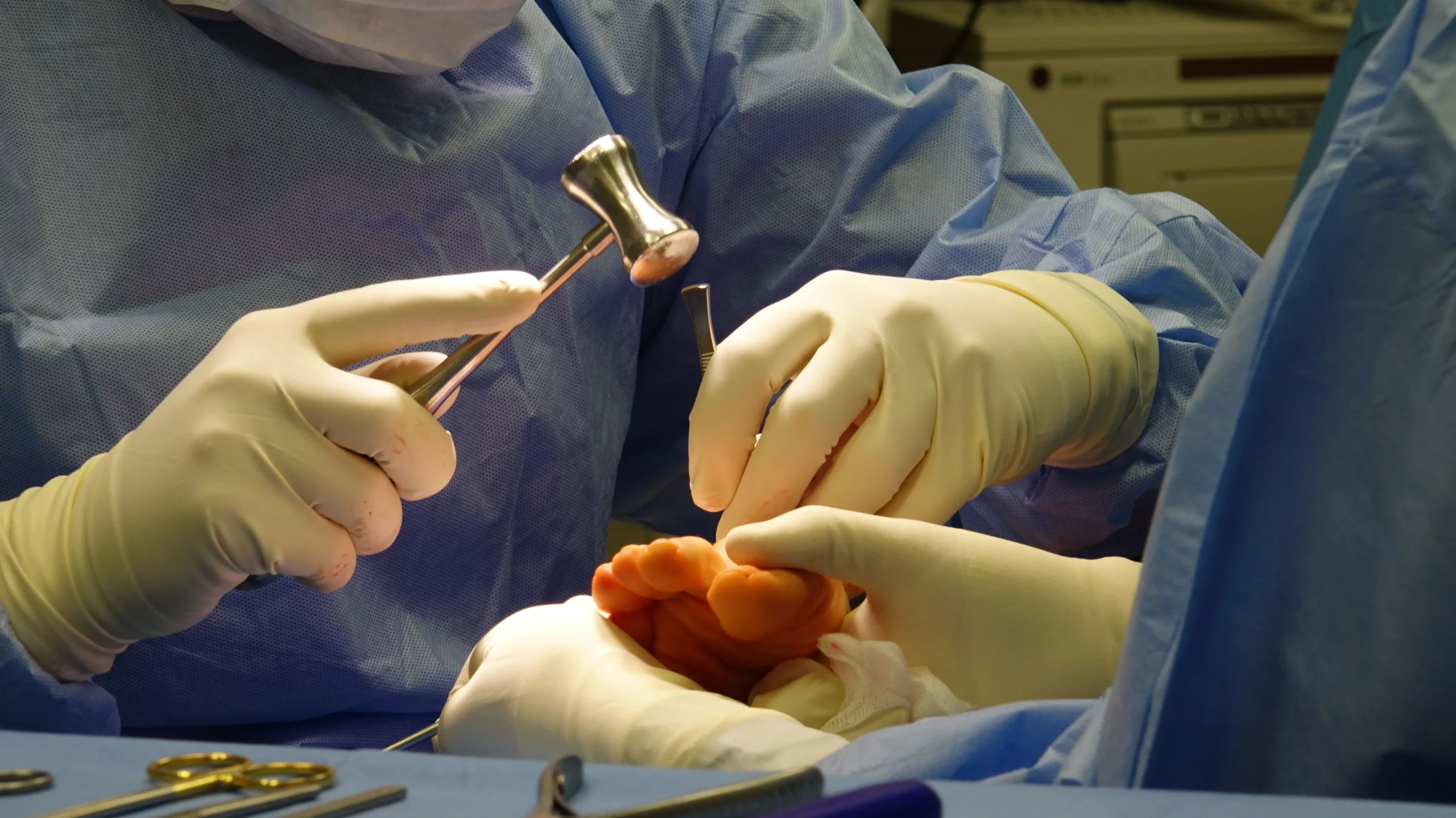

Is Minimally Invasive Surgery Right for Me?
Every patient is different. Although these benefits are attractive, minimally invasive surgery is not suitable for every patient; selecting the correct operation remains more important than the size of the incision. Where appropriate, MIS techniques may be recommended; in other situations, a conventional open procedure may provide a safer and more reliable long-term result. The decision is always based on achieving the best possible outcome rather than simply performing the smallest operation.
During your consultation, Mr Rashid will assess:
- The severity of your deformity
- The quality of your joints
- Your bone quality
- Your general health
- Your activity level
- Your expectations from surgery
Minimally invasive options across the foot and ankle
Minimally Invasive Bunion Surgery
Uses specialised burrs inserted through small skin incisions to realign the bones of the foot, stabilised with modern fixation techniques where appropriate. Many bunions can now be corrected without the large incisions traditionally associated with foot surgery.
Recovery Most patients walk immediately in a specialised post-operative shoe, with swelling improving over several months and a return to desk-based work within two to four weeks.
Minimally Invasive Hammer Toe Surgery
Hammer toe deformities can often be corrected using minimally invasive techniques, reducing soft tissue disruption while restoring toe alignment releasing contracted soft tissues, correcting toe position and, where necessary, stabilising the joints.
Recovery Patients generally walk immediately in a protective shoe, with swelling improving steadily over six to eight weeks.
Minimally Invasive Forefoot Surgery
A number of painful forefoot conditions can be treated using minimally invasive techniques, including metatarsalgia, lesser toe deformities, selected metatarsal osteotomies and forefoot overload syndromes. The exact procedure is individualised according to the underlying cause of pain.
Keyhole Ankle Surgery
Ankle arthroscopy is the minimally invasive treatment of choice for many ankle conditions. Through two or three tiny incisions, the ankle joint can be examined and treated using a high-definition camera and specialised instruments — for anterior impingement, cartilage injuries, loose bodies, early arthritis, synovitis and assessment of instability.
Recovery: Many patients return home on the day of surgery and begin rehabilitation soon afterwards.
Enhanced Recovery After Surgery (ERAS)
Mr Rashid follows modern enhanced recovery principles wherever appropriate, aiming to reduce pain, improve mobility and help patients return to their normal activities as safely and efficiently as possible.
- Thorough pre-operative planning
- Modern anaesthetic techniques
- Early mobilisation
- Individualised physiotherapy
- Optimised pain management
- Close postoperative follow-up
- Regional nerve blocks where appropriate
Frequently Asked Questions
Is minimally invasive surgery suitable for everyone?
Is recovery quicker?
Will I be able to walk after surgery?
Are the results as good as open surgery?
Mr Rashid is a Consultant Trauma and Orthopaedic Surgeon specialising exclusively in foot and ankle surgery. He offers the full spectrum of modern foot and ankle procedures, including minimally invasive surgery, complex reconstruction, total ankle replacement, and revision surgery. Rather than offering a single technique for every patient, he believes in selecting the most appropriate treatment for each individual ensuring every patient receives the operation best suited to their condition, lifestyle and long-term goals.
About Mr Rashid
Mr Anjum Rashid is a Clinical Lead and Consultant Orthopaedic Foot and Ankle Surgeon at James Cook University Hospital, Middlesbrough. He also works at Tees Valley Hospital, Woodlands Darlington, and Tyneside Surgical Services Newcastle.
Contact Info
Middlesbrough · Darlington · Newcastle